Methamphetamine Abuse: Methamphetamine Revisited

It seemed for a while in this country that we were getting the methamphetamine problem under control. Authorities were busy busting local mom and pop type labs and the ingredients needed to make methamphetamine (like pseudoephedrine) were becoming harder to get. Local law enforcement was visiting schools successfully educating the kids on the dangers of methamphetamine. Most of us had come to learn facts about methamphetamine. Our lessons included information about the memory impairment, “meth mouth” and psychotic behavior that could endanger family members – a high price to pay for the rush that users seek. The decrease in availability and the vast public education had methamphetamine off the radar screen. Drug treatment centers were turning their attention to the prescription drug epidemic that had their phones ringing.
But, the embers of a once huge methamphetamine fire never really went out. The smolders of the destroyed meth labs kept us from seeing it- but the fire was still there. The abusers that were still alive and the Mexican cartel soon had the fire blazing again with a little fanning. Authorities have now linked six major Mexican cartels with the production of methamphetamine that finds its way into the United States. Current users testify that the methamphetamine available through the Mexican cartel is stronger than any of the local stuff ever was. The shipment methods are sophisticated and once in this country, the drug travels through individuals that appear to have normal lives. Drug dealers can easily hide behind a construction hard hat or a middle class neighborhood.
Unless attention is paid now, the number of abusers will expand. Since they don’t grab attention like the prescription drug abusers who can die of a sudden overdose, it may take a while to notice them. But meth kills through erosion of the brain, body and psyche. It is so highly addictive that it could once again become the wild fire that was sweeping the nation in earlier years. We need to remind ourselves of some important facts about methamphetamine or it will be right next door again.
Methamphetamine increases the release of dopamine – the release of dopamine is what creates the rush that users feel.
Sleeplessness, irritability and anxiety start in the early stages of meth abuse.
A crash from the methamphetamine high is accompanied by severe depression and risk of suicide.
Prolonged use of methamphetamine can lead to paranoia, abnormal behavior and even violence.
Physical effects may include increase in blood pressure, severe weight loss, seizures and loss of brain function.
Methamphetamine causes damage to teeth and bones, often requiring extensive dental work.
Methamphetamine can cause severe deterioration in appearance with skin ulcerations, caused by the addict picking at the face. Beautiful people can become ugly within months.
Signs of methamphetamine abuse are large pupils, agitated and irritable behavior, change in sleep patterns, loss of weight and dental problems. These signs of drug addiction are similar to other drugs, but methamphetamine is especially deadly.
The good news is that methamphetamine addiction responds to effective drug treatment and many of not all the symptoms of meth abuse can disappear if treated early enough.
Narconon of Georgia has successfully treated meth abusers throughout the last ten years. Most of them are still clean and leading productive lives.
Article from articlesbase.com
Methamphetamine Abuse: METH abuse Punahou Capseeds project 2010
Punahou Capseeds Project 2010–takes place on the North Shore of O’ahu. Bringing Awareness to our growing problem of methamphetamine abuse. –vwilliams11
Video Rating: 0 / 5
Beautiful Boy

Sheff’s story is a first: a teenager’s addiction from the parent’s point of view—a real-time chronicle of the shocking descent into substance abuse and the gradual emergence into hope. Before meth, Sheff’s son Nic was a varsity athlete, honor student, and award-winning journalist. After meth, he was a trembling wraith who stole money from his eight-year-old brother and lived on the streets.
At its heart Beautiful Boy is an amazingly honest and exquisitely written account of a family’s torturous journey through addiction. It raises questions that reflect the fears of every parent: Where does one’s responsibility to a loved one end? How—and when—should a parent know whether his or her child is substance abusing? And how does a family recover from the wounds afflicted by addiction and get on with their lives? David Sheff has written a powerful and moving family portrait that will resonate soundly with all readers and is sure to become a classic.Amazon Best of the Month, February 2008: From as early as grade school, the world seemed to be on Nic Sheff’s string. Bright and athletic, he excelled in any setting and appeared destined for greatness. Yet as childhood exuberance faded into teenage angst, the precocious boy found himself going down a much different path. Seduced by the illicit world of drugs and alcohol, he quickly found himself caught in the clutches of addiction. Beautiful Boy is Nic’s story, but from the perspective of his father, David. Achingly honest, it chronicles the betrayal, pain, and terrifying question marks that haunt the loved ones of an addict. Many respond to addiction with a painful oath of silence, but David Sheff opens up personal wounds to reinforce that it is a disease, and must be treated as such. Most importantly, his journey provides those in similar situations with a commodity that they can never lose: hope –Dave Callanan

List Price: $ 24.00
Price: $ 24.00
”In these bleak days”: Parent methamphetamine abuse and child welfare in the rural Midwest [An article from: Children and Youth Services Review]

This digital document is a journal article from Children and Youth Services Review, published by Elsevier in . The article is delivered in HTML format and is available in your Amazon.com Media Library immediately after purchase. You can view it with any web browser.
Description:
This report describes the impact of parent methamphetamine abuse on the development and well-being of school-aged children, and considers implications for culturally appropriate child welfare services. Thirty-five adult informants from several, adjacent rural Midwestern counties in the United States were interviewed as part of a larger ethnographic study. These child welfare workers, other community professionals (educators, counselors, law enforcement personnel, and substance abuse treatment providers), and foster caregivers described their experiences with families involved with methamphetamine. Overall, informants described that children are brought by their methamphetamine-abusing parents into a rural drug culture characterized by distinct, antisocial beliefs and practices. Children’s experience of this culture includes environmental danger, chaos, neglect, abuse, loss, and isolation. Informants believed that children develop antisocial beliefs and practices such as lying, stealing, drug use, and violence through direct teaching by their parents and, indirectly, through observing parents’ own antisocial behavior. Informants described children as displaying psychological, social, and educational disturbances. They also described individual variation in functioning across children that they attributed, in part, to individual (e.g., temperament, intelligence), familial (e.g., extended family), and community (e.g., school) characteristics. Informants noted a need for effective child mental health services in the area, and for ensuring a positive environment for children’s future development through education of the children, foster parents and other community members.
List Price: $ 5.95
Price: $ 5.95
Leaving Dirty Jersey: A Crystal Meth Memoir
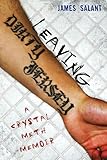
With his nickname, Dirty Jersey, tattooed on the inside of his left forearm, James Salant wanted everyone to know he was a tough guy.
At the age of eighteen, after one too many run-ins with the cops for drug possession, he left his upper-middle-class home in Princeton, New Jersey, for a stint at a rehab facility in Riverside, California. Instead of getting clean, he spent his year there shooting crystal meth and living as a petty criminal among not-so-petty ones until a near psychotic episode (among other things) convinced him to clean up.
In stark prose infused with heartbreaking insight, wicked humor, and complete veracity, Salant provides graphic descriptions of life on crystal meth — the incredible sex drive, the paranoia, the cravings. He details the slang, the scams, and the psychoses, and weaves them into a narrative that is breathtakingly honest and authentic. Salant grapples with his attraction to the thuggish life, eschewing easy answers — his parents, both therapists, were loving and supportive, and his family’s subtle dysfunctions typical of almost any American family.
Exploring the allure and effects of the least understood drug of our time, Leaving Dirty Jersey is that rarity among memoirs — a compulsively readable, superbly told story that is shocking precisely because it could happen to almost anyone.
List Price: $ 14.95
Price: $ 14.95
More Methamphetamine Abuse Information…